
AIMOOE Solution Review
Robot-Assisted Neurosurgery Navigation Solution
AIMOOE presents this neurosurgery navigation platform for teams reviewing neuronavigation robots used in biopsy planning, robotic arm coordination, and image-guided cranial procedures. The published system combines an optical positioning camera, control center, navigation markers and tools, and a software environment built around planning and real-time tracking.
For procurement groups comparing a practical cranial navigation solution, the visible product content is useful because it describes CT and MRI image import, composite 2D and 3D viewing, easy registration, and tool guidance tied to planned trajectories. This helps technical buyers frame early questions around system fit, robotic workflow support, and component scope before sample or project discussion.
The source page also positions the solution for tumor biopsy and minimally invasive neurosurgery, making it relevant for hospitals, robotics developers, and OEM evaluation teams that need a more structured starting point for internal review.
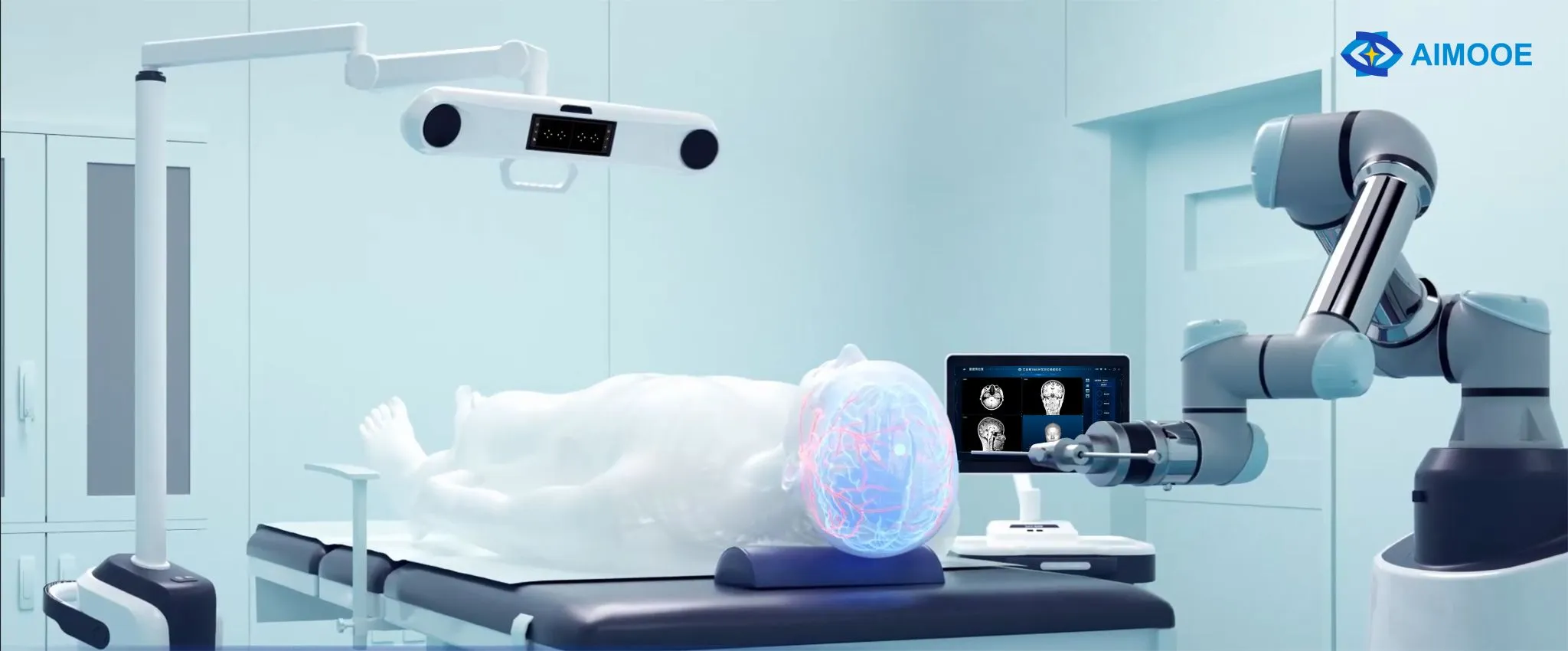
Media and Product Specifications
Description
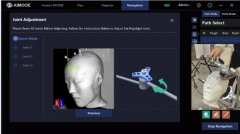
The AIMOOE neurosurgery navigation solution is presented as a computer-assisted platform for precise brain biopsy and minimally invasive procedures. The visible functions focus on 3D reconstruction, lesion-related planning support, trajectory preparation, easy registration, and intraoperative instrument tracking tied to preoperative and intraoperative images.
Product Specifications
| Product | Neurosurgery Navigation System Solution |
|---|---|
| Application Focus | Tumor biopsy and minimally invasive neurosurgery |
| Main Components | Optical positioning camera, control center, navigation markers and tools, software application |
| Image Workflow | Imports CT and MRI images for composite 2D and 3D viewing |
| Planning Support | Preoperative planning with transparent image adjustment and precise registration |
| Biopsy Support | Frameless instrument holder and dedicated biopsy drill kit for planned trajectories |
| Tracking Mode | Real-time surgical instrument tracking based on preoperative and intraoperative images |
| Buyer Status Note | Final integration scope to be confirmed by project requirements |
Core Supply Advantages
The visible component structure gives sourcing teams a clear way to discuss camera, control, software, and tool scope before requesting project-specific configuration details.
Core Supply Advantages
CT and MRI composite viewing, planning, and registration functions make it easier for technical reviewers to assess how the system may fit biopsy and robotic guidance workflows.
Core Supply Advantages
The page directly references frameless biopsy support and minimally invasive drilling, which helps buyers connect the platform to real procedure planning rather than reviewing a generic navigation concept.
Related Technical Articles
These AIMOOE articles add useful context for hospital sourcing teams, robotic surgery developers, and technical evaluators comparing neurosurgery navigation system options.
Evaluating Surgical Navigation Systems: Key Features for Hospital Procurement Decisions
This article focuses on trajectory control, composite imaging, and practical evaluation points that matter when hospitals compare systems for biopsy precision and procedural planning.
Read ArticleNavigating the Current Market of Neurosurgery Navigation Systems for Business Buyers
Buyers can use this piece to review product-line differences, supplier quality expectations, and how OEM medical equipment may be integrated into broader neurosurgery navigation offerings.
Read ArticleInnovations in Neuronavigation System Technology for Safer Neurosurgery Outcomes
This article highlights optical positioning cameras, control-center logic, and preoperative planning functions that support more consistent navigation review in complex cranial cases.
Read ArticleVerified Procurement Feedback
These procurement-style comments reflect the kinds of evaluation points medical technology teams often raise when comparing neurosurgery navigation platforms.
★★★★★
The value for our team was the clear link between imaging workflow and biopsy support. We could review the CT and MRI fusion logic together with the frameless holder concept before moving into a technical call.
Clinical Technology Procurement Manager
Saudi Arabia
★★★★★
We compare navigation suppliers on component clarity first. AIMOOE made it easier for our engineers to discuss optical camera scope, control center role, and what would need confirmation for robotic interface planning.
Senior Sourcing Engineer
Germany
★★★★★
For a robotics evaluation program, the listed planning and tracking functions gave us enough structure to prepare an internal review memo without relying on broad claims or undefined feature language.
Robotic Systems Category Lead
Brazil
Frequently Asked Questions
The questions below focus on planning, system scope, and sourcing workflow for teams reviewing this AIMOOE solution.
What functions are visible on the AIMOOE neurosurgery navigation solution page?
The visible product content lists CT and MRI image import, composite 2D and 3D image viewing, surgical planning, precise registration, real-time instrument tracking, a frameless instrument holder, and a dedicated biopsy drill kit for planned cranial procedures.
Which system components are presented for technical review?
AIMOOE presents an optical positioning camera, control center, navigation markers and tools, and software application as the main system components. These elements give engineering and procurement teams a practical basis for early integration discussion.
How can this solution support robotic biopsy workflows?
The source page states that the frameless instrument holder and dedicated biopsy drill kit are designed to reduce deviation from the planned trajectory and support minimally invasive drilling. Buyers evaluating robotic biopsy programs can use those points as a starting reference for workflow assessment.
Why do CT and MRI composite images matter in cranial navigation?
Composite CT and MRI viewing helps surgical teams compare anatomical structures, lesion position, and planned access paths in one navigation environment. For procurement review, that function shows how the platform supports planning clarity before and during cranial procedures.
What should buyers confirm before requesting a quotation?
A useful request should include the target procedure type, required navigation components, preferred robotic interface scope, image workflow needs, expected quantity, destination region, and any sample or documentation expectations. Those details help align the supplier response with the actual project path.
Where can procurement teams continue the discussion with AIMOOE?
AIMOOE provides a public Contact Us page for project discussions. Teams can use that page together with the product URL and internal article references to continue technical, sourcing, and integration conversations.
